I almost couldn’t have picked a better time to do fieldwork in Latvia. I arrived on Monday, and this week’s main political story was the formation of a new government.
Two weeks ago, the previous government collapsed. The immediate trigger appears to have been a series of drone incidents, in which Ukrainian drones entered Latvian territory after being redirected by Russian air defense systems. The Minister of Defense stepped down, followed shortly after by Prime Minister Evika Siliņa. But these events seem to be only part of the story. Experts I spoke to also pointed to broader frustrations: concerns about indecisive leadership and a sense among citizens that, despite high levels of defense spending, their security isn’t guaranteed.
At the same time, Latvia is already looking ahead to the national parliamentary elections scheduled for October. Some parties have clearly entered campaign mode. The populist radical right party Latvia First, for example, is already highly visible. Walking around Riga, I’ve seen the face of its leader, Ainārs Šlesers, on more billboards than any other politician.
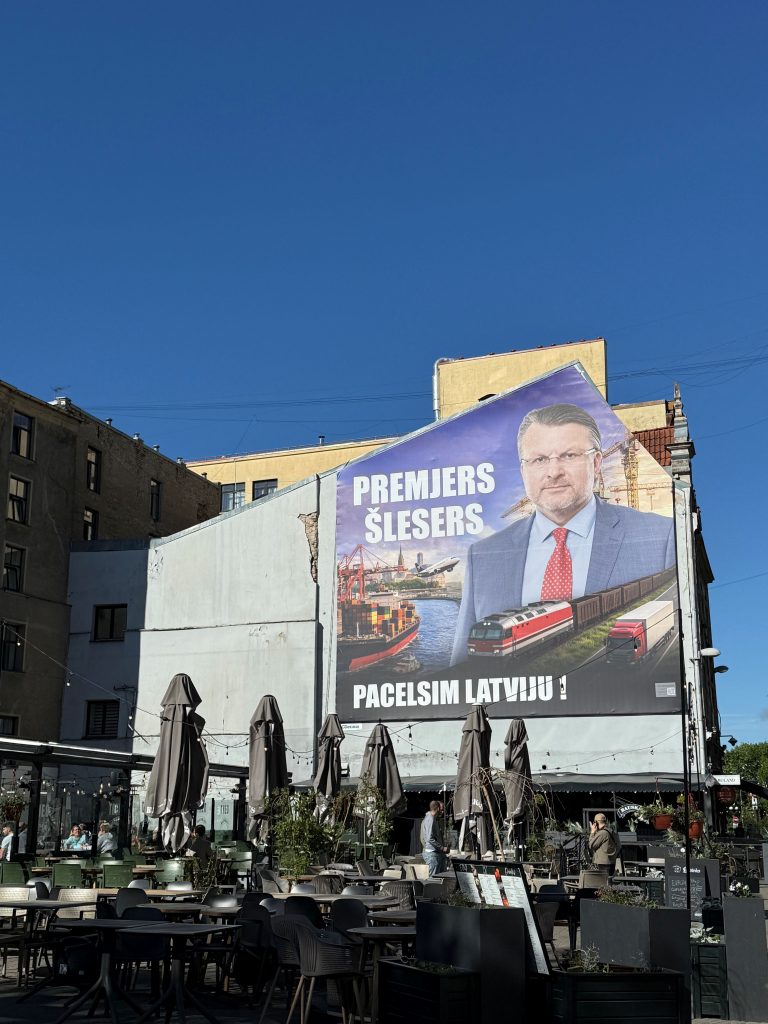
Current polls suggest the party is leading. Considering my research interests, this is particularly interesting. In my research, I classify Latvia First as an illiberal and more authoritarian party, making their growing electoral support something I’ll definitely keep an eye on.
Since I only start interviewing citizens next week, I used these first days to speak with experts on Latvian politics and catch up on reading. So far, my main takeaway is that understanding Latvian politics requires understanding three things.
1. Political parties come and go quickly
Latvia has a high turnover of political parties. In almost every election cycle, new parties enter the Saeima (the national parliament). One explanation for this is dissatisfaction with the economy. Latvia performs relatively well by European standards, but many Latvians compare their situation to that of neighboring Estonia and Lithuania, which have often performed slightly better economically.
This creates space for newcomers (sometimes successful businesspeople) who promise to improve Latvia’s economic situation. Starting a party is also relatively accessible: only 200 Latvian citizens aged 18 or older are needed to found one.
2. Ethnicity strongly shapes voting behavior
Another important factor is the divide between ethnic Latvians and East Slavs. Broadly speaking, ethnic Latvians are less likely to vote for parties primarily targeting East Slavs, and vice versa.
Of course, other factors matter too, such as ideology, socioeconomic background, and whether someone lives in a rural or urban area, but this ethnic divide often shapes which parties voters consider in the first place.
3. Leaders matter
One expert gave me an answer I found particularly interesting. When I asked: How do people still know which party to vote for if this changes every election?, he answered simply: charismatic leaders.
Ideology and ethnicity may function as filters, but charismatic leaders often become the deciding factor. In a political landscape where parties frequently emerge and disappear, recognizable personalities seem to be influential.
Next week, I’ll move from expert interviews to citizen interviews. I’m curious to see whether these broader political patterns also appear in the conversations I’ll have on the streets of Riga.